S.Korea’s Samsung to halt home appliance sales in China, signaling rise of local rivals
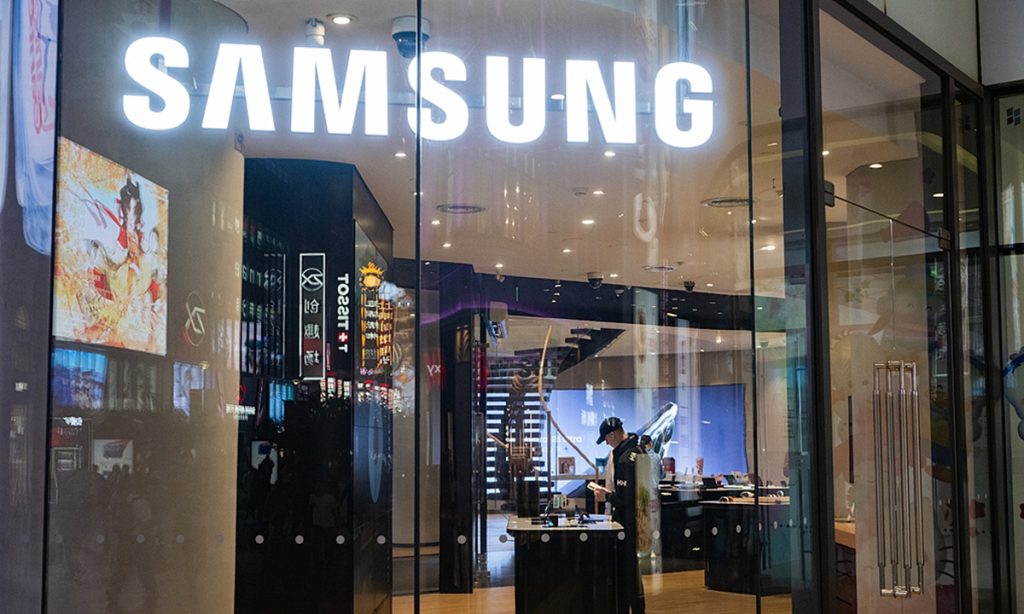
South Korea's Samsung Electronics announced on Wednesday that it will cease sales of all home appliance products in the Chinese mainland, including televisions and monitors, while mobile phone is still on sale, according to a statement published on its official website on Wednesday.
A Chinese analyst said the move reflects normal market dynamics and underscores the growing competitiveness of domestic brands, whose product strength now rivals that of international peers.
Samsung said the decision was made after careful consideration in response to rapidly changing market conditions. According to its statement, the affected product lines include televisions, monitors, commercial display systems, air conditioners, refrigerators, washing machines, dryers, washer-dryer combos, garment care systems, audio equipment, projectors, vacuum cleaners, and air purifiers.
The company added that after-sales services, including installation, return and maintenance, will continue to be provided to existing customers in accordance with China's relevant laws on protection of consumer rights and interests.
Industry data cited by Chinese media outlet DoNews showed that as of April 5, 2026, Samsung's offline market share in China stood at 3.62 percent for televisions, 0.41 percent for refrigerators, and 0.38 percent for washing machines. Television sales revenue has dropped to about 5 percent of its peak level, while overall home appliance revenue has fallen to less than 1 percent of its historical high.
Samsung's challenges are not limited to China. According to South Korea's Yonhap News Agency, rising global uncertainties and increasing raw material and component costs have continued to erode profitability in its home appliance business.
In 2025, Samsung's Visual Display and Digital Appliances divisions — responsible for televisions and home appliances — reported combined losses of 200 billion Korean won ($138.06 million). Over the same period, the net profit of Samsung's China sales subsidiary fell 44 percent year-on-year to 168.1 billion won.
The shift comes as Chinese brands have steadily expanded their domestic market share, supported in part by China's policy-backed trade-in program. In 2025, total TV shipments in China reached 32.895 million units, with the top eight domestic brands —Hisense, TCL, Xiaomi, Skyworth, Changhong, Haier, Konka and Huawei — accounting 94.1 percent of the market, according to Chinese industry data provider Runto Technology.
By contrast, the combined annual shipments of major foreign brands — including Samsung, Sony, Philips and Sharp — have fallen below 1 million units, remaining at the bottom of the market, said the survey.
Liu Dingding, a veteran industry observer, told the Global Times on Tuesday that with foreign brands' market shares dropping into a relatively low level, the cost of maintaining operations in China — including staffing and marketing — has become increasingly unjustifiable, making exit a rational business decision.
Despite intensifying competition, China remains a highly attractive market for global companies. In 2025, total retail sales of consumer goods surpassed 50 trillion yuan ($7.32 trillion) for the first time, reaching 50.1 trillion yuan, up 3.7 percent year-on-year. Consumption contributed 52 percent to economic growth, an increase of 5 percentage points, official data showed.
Meanwhile, Samsung is not fully withdrawing from China. According to Yonhap, the company will continue to operate in mobile devices, semiconductors and medical equipment sectors. It plans to expand customized mobile products and services while strengthening cooperation with local AI firms to develop features tailored to Chinese users.
The company is also expected to shift its focus in China toward advanced industrial sectors, including R&D, manufacturing cooperation and investment, while maintaining operations at its Suzhou home appliance plant and semiconductor facilities in Xi'an, Northwest China's Shaanxi Province and Suzhou in East China's Jiangsu Province, according to Yonhap.
Da Zhigang, a researcher at the Institute of Northeast Asian Studies at the Heilongjiang Provincial Academy of Social Sciences, said that China's home appliance industry has become increasingly mature and highly competitive. Samsung's shift in investment focus in China toward AI, green development, and other high value-added, high-tech sectors is also aligned with the country's manufacturing development priorities.
Liu said the contraction of South Korean consumer electronics and automotive brands in China fundamentally reflects the rise of Chinese manufacturing and innovation, as consumers gain access to higher-quality alternatives.
"Brands that fail to adapt to market changes or upgrade products in a timely manner are likely to be naturally phased out by market forces," he said.